
With hazardous heat expected across Maine through the July 4 holiday, Southern Maine Community College is reminding the SMCC community to take steps to stay safe at work, at home and while traveling.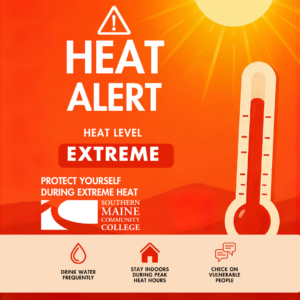
Extreme heat can affect anyone, especially during stretches of high temperatures and humidity. Students, employees and community members are encouraged to plan ahead, limit unnecessary time outdoors, stay hydrated and check on others who may need support.
The Centers for Disease Control and Prevention and the American Red Cross recommend the following steps during periods of extreme heat:
Stay in air-conditioned indoor locations as much as possible. If your home does not have air conditioning, consider spending time in a public library, community building, mall or cooling center.
Drink plenty of fluids, even if you do not feel thirsty. Avoid sugary, caffeinated or alcoholic drinks, which can contribute to dehydration.
Schedule outdoor activity carefully. When possible, move strenuous outdoor work, exercise or errands to the morning or evening.
Wear loose, lightweight, light-colored clothing and use sunscreen when outdoors.
Pace yourself. Take breaks in the shade or an air-conditioned space, especially during physical activity.
Take cool showers or baths to help lower your body temperature.
Check on friends, family members and neighbors, especially older adults, people with medical conditions, children, outdoor workers and anyone without reliable access to cooling.
Never leave children or pets in cars, even for a short time.
Monitor local weather, news and emergency alerts for the latest heat and safety updates.
The SMCC community should also know the signs of heat-related illness. Heat cramps may include heavy sweating and muscle pain or spasms. Heat exhaustion may include weakness, dizziness, nausea, fainting, heavy sweating or cool, clammy skin. Heat stroke is a medical emergency and may include confusion, loss of consciousness, seizures or very high body temperature. Call 911 immediately if someone may be experiencing heat stroke.
Many Maine communities have opened cooling centers for people who need a break from the heat. The Maine Emergency Management Agency maintains a searchable list of cooling centers by town.
For more information, review the American Red Cross Extreme Heat Safety Checklist and CDC extreme heat safety guidance.