

About SMCC Science Seminars
Empowering Through Scientific Discovery
In collaboration with esteemed higher education partners, SMCC science seminars bring cutting-edge research and essential insights directly to our community. These engaging sessions bridge the gap between academia and the public, fostering a deeper understanding of the scientific world through accessible education.
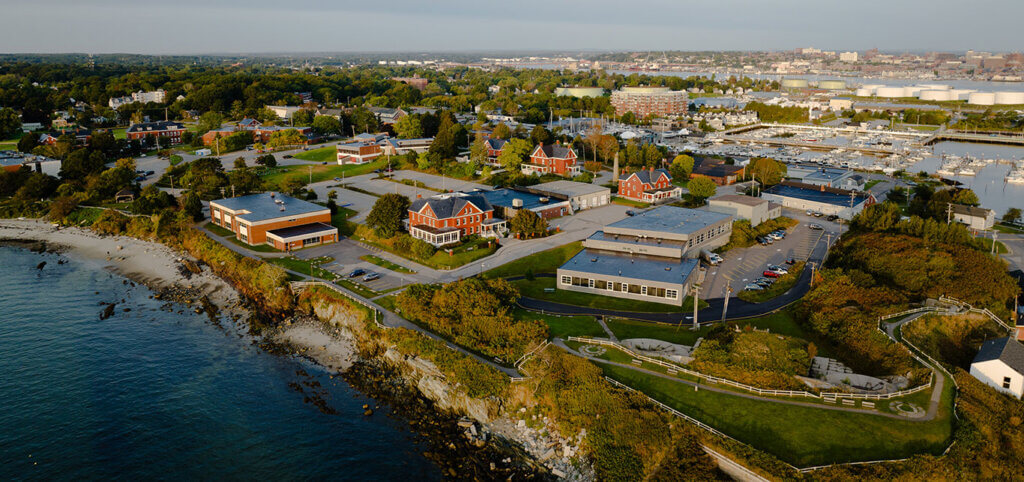
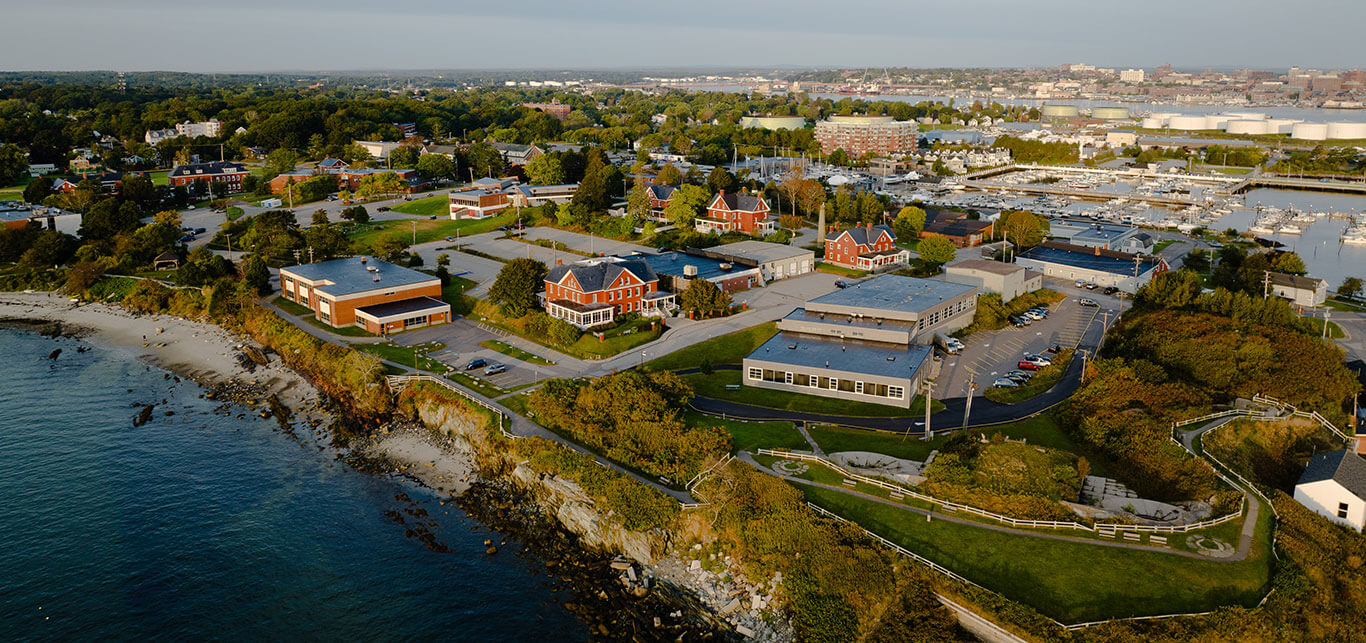
For more information, please contact SMCC Chair of Biological Sciences, Professor: Daniel Moore, Ph.D. at: dmoore@mainecc.edu. SMCC Science Seminars are held at: 77 Fort Road, Jewett Auditorium, Southern Maine Community College, South Portland.

Upcoming Seminars

Resurrecting ‘Rhat Soupe’: Alcohol and Allegorical Maps in Mid-19th Century America
Tuesday, March 17, 5:30 p.m.
77 Fort Rd, Jewett Auditorium, SMCC, South Portland
Featuring Presenter: Louis Miller, Cartographic Reference & Teaching Librarian and Assistant Director for Research and Fellowship Programs at the University of Southern Maine’s Osher Map Library and Smith Center for Cartographic Education
What is ‘rhat soupe’ and what does it have to do with maps produced by the Temperance Movement? While perusing early photographic images to pair with John Cullum’s 1836 map of Portland, Louis Miller came across an image of a store with an advertisement for “rhat soupe.” Eager to learn more about how this nausea-inducing “soupe” gained its moniker, as well as what it was actually made out of, his research led him down a rabbit hole that ultimately reveals the clever cartographic arguments utilized nationally by the Temperance Movement in the 1830s as well as how “rhat soupe” and the 1835 court case that inspired its name, fundamentally shifted the platform of the American Temperance Society. View the informational flyer.

Immune Mechanisms in Parkinson’s Disease
Wednesday, March 18, 5:30 p.m.
77 Fort Rd, Jewett Auditorium, SMCC, South Portland
Featuring Presenter: Matt Havrda Ph.D., Associate Dean, Research and Scholarship; Associate Professor College of Osteopathic Medicine University of New England
Understanding of Parkinson’s Disease (PD) has evolved based on evidence of complex immune cell alterations that affect CNS homeostasis. Clinical observations and numerous studies implicate a pro-inflammatory milieu in the degeneration of dopamine neurons. This talk aims to go beyond the observation that inflammation exists to highlight precise mechanisms that define how immune dysregulation drives neurodegeneration.

Seasonal Differences in Neuromodulation of the American Lobster Heart
Wednesday, April 8, 5:30 p.m.
77 Fort Rd, Jewett Auditorium, SMCC, South Portland
Featuring Presenter: Daniel Powell Ph.D., Assistant Professor of Biology and Neuroscience, Bowdoin College
The Powell lab uses two motor circuits, the cardiac and stomatogastric ganglia, to further an understanding of the fundamentals of neuronal circuitry, modulation, and behavior,. In decapod crustaceans, the cardiac ganglion controls the heartbeat and the stomatogastric ganglion controls internal chewing (gastric mill) and filtering (pylorus) of food. The focus is on how neuronal circuits can withstand changes in ambient conditions such as temperature and salinity, and how peptide modulators alter circuit responses to these perturbations. Electrophysiology is used to study changes in neuron and circuit electrical properties.
Thanks to Our Partner Organizations
Thanks for the support from Maine INBRE—and Maine-SMART EPSCoR, with funding from the National Science Foundation.
About Maine INBRE:
The Maine IDeA Network of Biomedical Research Excellence (INBRE) strengthens Maine’s capacity to conduct competitive biomedical research. This partnership connects various Maine educational and research institutions under the leadership of the MDI Biological Laboratory, with funding provided by the National Institute of General Medical Sciences (NIGMS) of the National Institutes of Health (NIH). Southern Maine Community College (SMCC) is a Maine INBRE member.
About Maine-SMART EPSCoR:
Maine-SMART (Strengthening Maine’s Research Ecosystem and Pathways Through Strategic Capacity Building) is a National Science Foundation (NSF) EPSCoR initiative led by the University of Maine. It is committed to leveraging current and evolving infrastructure investments and overcoming systemic barriers that impede the growth of Maine’s R&D ecosystem. It is a statewide collaborative involving many partners including Southern Maine Community College (SMCC).
Contact Us:
SMCC Chair of Biological Sciences, Professor: Daniel Moore, Ph.D.: dmoore@mainecc.edu


