
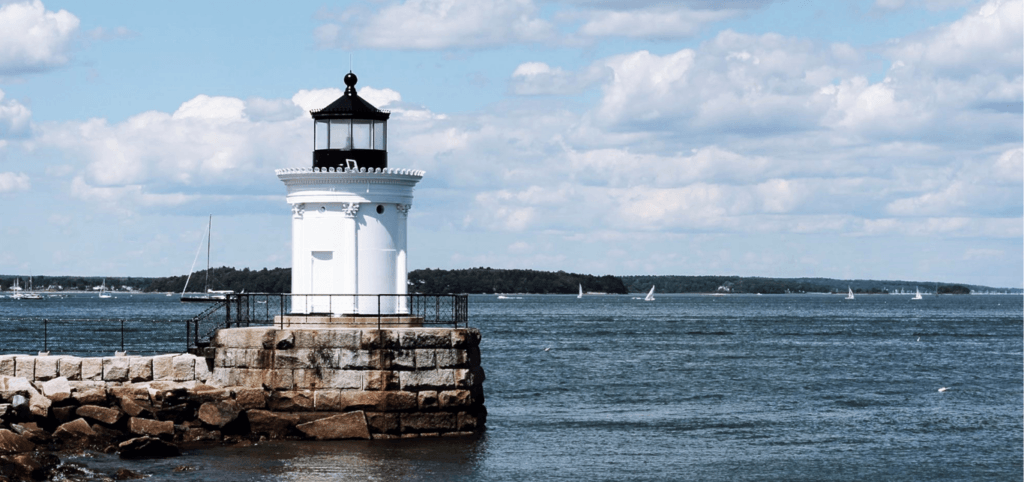
Celebrating National Poetry Month
SMCC Chapel – South Portland Campus (View Map)
Thursdays this April, 12:15 to 1:30 p.m.
All Are Welcome to Join
April is National Poetry Month, and we’re continuing a long-standing tradition at SMCC that celebrates the power of the spoken word. Whether you’re a lifelong poetry enthusiast or someone looking to share a haiku or favorite song lyrics, we welcome you to join us. You’re welcome to: Read a favorite poem that moved you. Share a verse you “somewhat like.” Simply sit back and listen to the rhythm of the room. Come for the poetry, stay for the community.

Contact Info
If you have any questions, please contact SMCC English Department Chair Kevin Sweeney: ksweeney@mainecc.edu.
Featured Poems
Looking for a little inspiration? Throughout April, we’ll be highlighting a rotating selection of featured poems right here. From timeless classics to hidden gems shared by our own SMCC community, these works capture the spirit of our weekly gatherings.
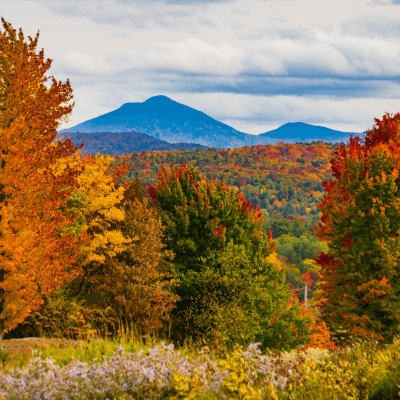
Slipper By Mika Altidor
“Here’s a poem by an SMCC student, Mika Altidor, which was published in the Winter 2026 issue of The Cafe Review, Portland’s oldest and still running poetry journal. I think historians, particularly local ones, will like this poem, but I think plenty of other people will too.”–SMCC English Department Chair Kevin Sweeney
My wife’s last slippers, Oct. 29th 1841, aged 54
Source: anonymous donor/found in collection
Eleanor Foreman Brooks
Eleanore spelt 5 different ways
Foremen spelt 3 different ways
Including, unfortunately, your son’s death certificate that listed you as “Ellen Fairmen”
I hope you know that I am being gentle with your shoes
That your husband cared so much that he wrote three separate notes on them to mark how important they were, you were, to him
That your daughter kept your shoes
And so did her daughter
And so on until they ended up from Brattleboro Vermont to Portland Maine in the care of Westbrook College
Then later given, in 1993, to the Maine Historical Society
Then picked up by a historic clothing intern in the summer of 2025
I hope you know that I am being gentle as I measure the frayed silk laces
The worn toe box, the flaking leather
As I take pictures on my iPhone
Type a description on my computer
I hope you know that I am being gentle as I place inserts inside to prevent them from collapse
And gentle as I make a handling tray
And, I hope you know
I really do, please believe me
That I am being gentle as I flag them for de-accession
And write in the comment section
“Shoes belonged to Vermont woman and do not have relevance to the Maine Historical Society”

News from the Planet of Tall Women By Alice Persons
“Here’s a poem from one-time SMCC English adjunct (years ago) and a long-time USM Business Law adjunct. I used this poem in Introduction to Literature this semester, and it seemed like people enjoyed it. I’d welcome any feedback. Alice Persons is a local poet whose work has been read several times on national radio by Garrison Keillor. The attached poem is from her book Thank Your Lucky Stars.” –SMCC English Department Chair Kevin Sweeney
Often it’s a good thing;
reaching the top shelf
painting pretty far up without a ladder
being able to see the parade
getting noticed in the right way
Here’s some unsolicited advice:
don’t ask us how the weather is up here
or whether we played baskeball
if we have trouble buying clothes
or finding guys to dance with
and was high school really difficult?
We’ve heard it all before
and the answers are give me a break, yes, yes and
sometimes, and wasn’t it for you?
I love seeing a photo of a couple
where she’s taller and he looks proud
and doesn’t care that she’s wearing heels
towering over him – a mensch!
There are legions of us now
long-legged and strong
with your own kind of grace
and much less slouching
than when I was young
Do me a favor – next time you’re at a wedding
or any place with dancing
and you see that tall girl or woman
tapping her fee very gently to the music
even if you’re short, or old, or have no rhythm,
go ask her to dance.
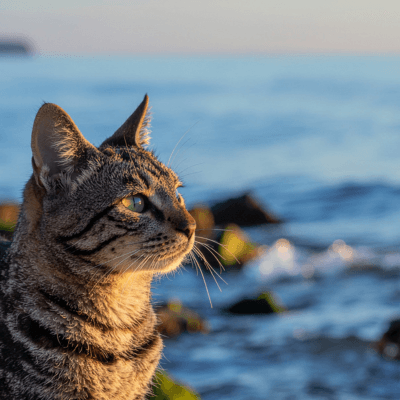
Chaplinesque By Hart Crane
Submitted By English Department Chair Kevin Sweeney
“Today’s poem is one of my old favorites, and I’m dedicating it, in a sense, to SMCC Security and Financial Aid, particularly because of the second stanza which might remind some long-time SMCC employees of a cat named Rudy who once spent days in Financial Aid and nights in Security from spring until early winter before returning to his home in the Willard Beach neighborhood. One of his trustworthy campus caretakers, Mike Lussier, is retiring this year, so I think it would be appropriate to also dedicate this poem to him in particular.” – Kevin
We will make our meek adjustments,
Contented with such random consolations
As the wind deposits
In slithered and too ample pockets.
For we can still love the world, who find
A famished kitten on the step, and know
Recesses for it from the fury of the street,
Or warm torn elbow coverts.
We will sidestep, and to the final smirk
Dally the doom of that inevitable thumb
That slowly chafes its puckered index toward us,
Facing the dull squint with what innocence
And what surprise!
And yet these fine collapses are not lies
More than the pirouettes of any pliant cane;
Our obsequies are, in a way, no enterprise.
We can evade you, and all else but the heart:
What blame to us if the heart live on.
The game enforces smirks; but we have seen
The moon in lonely alleys make
A grail of laughter of an empty ash can,
And through all sound of gaiety and quest
Have heard a kitten in the wilderness.

A Supermarket in California By Allen Ginsberg
Submitted By Philosophy Faculty Member Rich Pitre
“Today’s poem comes to us from philosophy faculty member Rich Pitre. It’s one by Allen Ginsberg, the Beat poet and something of an American legend, although I remember hearing him be condemned on a radio station in Kansas as I was driving across that wide state a few decades ago. As he points out in one of his poems (not this one), being Jewish, being gay, and having been diagnosed at one point as mentally ill, essentially kept such a person from being recognized as a mainstream writer.” –SMCC English Department Chair Kevin Sweeney
What thoughts I have of you tonight, Walt Whitman, for I walked down the sidestreets under the trees with a headache self-conscious looking at the full moon.
In my hungry fatigue, and shopping for images, I went into the neon fruit supermarket, dreaming of your enumerations!
What peaches and what penumbras! Whole families shopping at night! Aisles full of husbands! Wives in the avocados, babies in the tomatoes!—and you, Garcia Lorca, what were you doing down by the watermelons?
I saw you, Walt Whitman, childless, lonely old grubber, poking among the meats in the refrigerator and eyeing the grocery boys. I heard you asking questions of each: Who killed the pork chops? What price bananas? Are you my Angel? I wandered in and out of the brilliant stacks of cans following you, and followed in my imagination by the store detective. We strode down the open corridors together in our solitary fancy tasting artichokes, possessing every frozen delicacy, and never passing the cashier. Where are we going, Walt Whitman? The doors close in an hour. Which way does your beard point tonight? (I touch your book and dream of our odyssey in the supermarket and feel absurd.) Will we walk all night through solitary streets? The trees add shade to shade, lights out in the houses, we’ll both be lonely. Will we stroll dreaming of the lost America of love past blue automobiles in driveways, home to our silent cottage? Ah, dear father, graybeard, lonely old courage-teacher, what America did you have when Charon quit poling his ferry and you got out on a smoking bank and stood watching the boat disappear on the black waters of Lethe?
Counting, this New Year’s Morning, What Powers Yet Remain to Me By Jane Hirshfield
Submitted By English Adjunct Faculty Member Megan Campbell Regnier
“I’m so grateful for today’s poem, sent to us by English adjunct Megan Campbell Regnier, because the poet, Jane Hirshfield, is someone I always enjoy reading, whether in her poems or her essays.” -SMCC English Department Chair Kevin Sweeney
The world asks, as it asks daily:
And what can you make, can you do, to change my deep-broken, fractured?
I count, this first day of another year, what remains.
I have a mountain, a kitchen, two hands.
Can admire with two eyes the mountain,
actual, recalcitrant, shuffling its pebbles, sheltering foxes and beetles.
Can make black-eyed peas and collards.
Can make, from last year’s late-ripening persimmons, a pudding.
Can climb a stepladder, change the bulb in a track light.
For four years, I woke each day first to the mountain,
then to the question.
The feet of the new sufferings followed the feet of the old,
and still they surprised.
I brought salt, brought oil, to the question. Brought sweet tea,
brought postcards and stamps. For four years, each day, something.
Stone did not become apple. War did not become peace.
Yet joy still stays joy. Sequins stay sequins. Words still bespangle, bewilder.
Today, I woke without answer.
The day answers, unpockets a thought from a friend
don’t despair of this falling world, not yet
didn’t it give you the asking
Questions From A Worker Who Reads By Bertolt Brecht
Submitted By Electrical Engineering Dept. Faculty Member Chris Teret
“Today’s poem comes to us from electrical engineering faculty member Chris Teret who is currently our MEA local union president. As a former president and long-time MEA member, I know how lucky we are to have him. Some of us learned who Bertolt Brecht was by reading or seeing one of his plays (Mother Courage was a great one), but as Chris reminds us, he’s a poet too.” -SMCC English Department Chair Kevin Sweeney
Who built Thebes of the seven gates?
In the books you will find the names of kings.
Did the kings haul up the lumps of rock?
And Babylon, many times demolished
Who raised it up so many times? In what houses
of gold-glittering Lima did the builders live?
Where, the evening that the Wall of China was finished
Did the masons go? Great Rome
Is full of triumphal arches. Who erected them? Over whom
Did the Caesars triumph? Had Byzantium, much praised in song
Only palaces for its inhabitants? Even in fabled Atlantis
The night the ocean engulfed it
The drowning still bawled for their slaves.
The young Alexander conquered India.
Was he alone?
Caesar beat the Gauls.
Did he not have even a cook with him?
Philip of Spain wept when his armada
Went down. Was he the only one to weep?
Frederick the Second won the Seven Year’s War. Who
Else won it?
Every page a victory.
Who cooked the feast for the victors?
Every ten years a great man?
Who paid the bill?
So many reports.
So many questions.
Mingulay Boat Song By Sir Hugh Roberton
Submitted By Math Dept. Faculty Member Scott Ciampa
“Today’s poem comes to us from Scott Ciampa, a math department faculty member who can affirm that it’s not only English teachers who read poetry. Scott provides a fine introduction below that certainly resonated with me who agrees with his take on AI and the inevitable challenges life presents: ‘Here’s my submission for this year. I chose it because, in our crazy, now AI-driven world, we all (myself especially!) find ourselves longing for the halcyon days of the past when life was simpler. But, it helps to cope with the present by keeping perspective that life has always included struggles.’ This poem was written by the Scottish composer Sir Hugh Roberton in the 1930s in memory of a lost way of life. The inhabitants of Mingulay in the Outer Hebrides had eked out a precarious subsistence living based mainly on fishing, but the last of a dwindling population abandoned the island in 1912.” -SMCC English Department Chair Kevin Sweeney
Heel yo ho boys, let her go boys,
Bring her head round and all together,
Heel yo ho boys, let her go boys,
Sailing homeward to Mingulay.
What care we though white the Minch is?
What care we for wind or weather?
When we know that every inch is,
Sailing homeward to Mingulay.
When the wind is wild with shouting,
And the waves mount ever higher,
Anxious eyes turn ever seaward,
To see us home safe to Mingulay.
Ships return now heavy laden,
Sweethearts holding bairns a-crying,
They return now as the sun sets,
They return home to Mingulay.
Sweethearts waiting by the pierhead,
Or looking seaward from the heather,
Heave her ’round boys and we’ll anchor,
Ere the sun sets on Mingulay.

The Baseball Players By Donald Hall
Submitted By Education Dept. Adjunct Faculty Member David Clark
Today’s poem was sent to us by David Clark, an Education Department adjunct for the Brunswick and South Portland campuses. See his introduction: “I thought that with the (rumored) appearance of Spring in Maine we should celebrate the beginning of baseball season with one of my favorite Donald Hall (poet laureate 2006-2007) poems. The Baseball Players appears in HEART OF THE ORDER: Baseball Poems-edited by Fried (Persea Books, 2014).”
Against the bright
grass the white-knickered
players tense, seize,
and attend. A moment
ago, outfielders
and infielders adjusted
their clothing, glanced
at the sun and settled
forward, hands on knees;
the pitcher walked back
of the hill, established
his cap and returned;
the catcher twitched
a forefinger; the batter
rotated his bat
In a single circle. But now
they pause: wary,
exact, suspended while
abiding moonrise
lightens the angel
of the overgrown
garden, and Walter Blake
Adams, who died
at fourteen, waits
under the footbridge.
Familiar Reflections in Dutch Mirrors By Anne Strand
Somewhere over the Netherlands
we passed a windmill farm,
and from the plane they looked like
the tops of dandelions,
tiny pinwheels dancing in the sun.
Are you still writing? she asked.
We gathered on the third Thursday in November,
an unlikely group of outliers,
to relish the tartness of cranberries
and the warmth of spiced wine.
In German it means “glowing”
said a man with gentle eyes,
as he balanced a glass from which steam spiraled.
To her question, I offered an excuse about
my busy schedule, graduate school.
And as I cycled across the city later that night,
I conjured verses of the poems I’d left undone
from a decade prior—
musings from a distant autumn’s dawn,
a hazy history now,
when I first read the note etched on the studio wall,
warning of the stark passing of time
in a place like this.
Start Close In By David Whyte
Submitted By Communications & New Media Studies Dept. Chair Kate Sibole
“This one comes to us from Kate Sibole, who chairs the Communications & New Media Studies Department and who also provides a nice introduction below: I have been waiting for April with unreasonable devotion! It brings poetry month, the ceremonial retirement of the furnace, and Barbara Streisand’s birthday, which is reason enough… Here’s one I have shared with countless students who show up not knowing how to get there from here. But in truth…I’m the one that needs and reads this as a constant reminder to just keep going. And if you want a real treat, listen to him read it out loud.” -SMCC English Department Chair Kevin Sweeney
Start close in,
don’t take the second step
or the third,
start with the first
thing
close in,
the step
you don’t want to take.
Start with
the ground
you know,
the pale ground
beneath your feet,
your own
way to begin
the conversation.
Start with your own
question,
give up on other
people’s questions,
don’t let them
smother something
simple.
To hear
another’s voice,
follow
your own voice,
wait until
that voice
becomes an
intimate
private ear
that can
really listen
to another.
Start right now
take a small step
you can call your own
don’t follow
someone else’s
heroics, be humble
and focused,
start close in,
don’t mistake
that other
for your own.
Start close in,
don’t take
the second step
or the third,
start with the first
thing
close in,
the step
you don’t want to take.
Song of the Open Road By Walt Whitman
Submitted By Adjunct Faculty Member Dan Ford
“Today’s poem comes to us from adjunct faculty member Dan Ford. He labeled his submission “My Annual Whitman Contribution.” This poem is a bit longer than yesterday’s and Friday’s, but I would agree with Dan that Walt Whitman is always worth reading.” –SMCC English Department Chair Kevin Sweeney
1
Afoot and light-hearted I take to the open road,
Healthy, free, the world before me,
The long brown path before me leading wherever I choose.
Henceforth I ask not good-fortune, I myself am good-fortune,
Henceforth I whimper no more, postpone no more, need nothing,
Done with indoor complaints, libraries, querulous criticisms,
Strong and content I travel the open road.
The earth, that is sufficient,
I do not want the constellations any nearer,
I know they are very well where they are,
I know they suffice for those who belong to them.
(Still here I carry my old delicious burdens,
I carry them, men and women, I carry them with me wherever I go,
I swear it is impossible for me to get rid of them,
I am fill’d with them, and I will fill them in return.)
2
You road I enter upon and look around, I believe you are not all that is here,
I believe that much unseen is also here.
Here the profound lesson of reception, nor preference nor denial,
The black with his woolly head, the felon, the diseas’d, the illiterate person, are not denied;
The birth, the hasting after the physician, the beggar’s tramp, the drunkard’s stagger, the laughing party of mechanics,
The escaped youth, the rich person’s carriage, the fop, the eloping couple,
The early market-man, the hearse, the moving of furniture into the town, the return back from the town,
They pass, I also pass, any thing passes, none can be interdicted,
None but are accepted, none but shall be dear to me.
3
You air that serves me with breath to speak!
You objects that call from diffusion my meanings and give them shape!
You light that wraps me and all things in delicate equable showers!
You paths worn in the irregular hollows by the roadsides!
I believe you are latent with unseen existences, you are so dear to me.
You flagg’d walks of the cities! you strong curbs at the edges!
You ferries! you planks and posts of wharves! you timber-lined sides! you distant ships!
You rows of houses! you window-pierc’d façades! you roofs!
You porches and entrances! you copings and iron guards!
You windows whose transparent shells might expose so much!
You doors and ascending steps! you arches!
You gray stones of interminable pavements! you trodden crossings!
From all that has touch’d you I believe you have imparted to yourselves, and now would impart the same secretly to me,
From the living and the dead you have peopled your impassive surfaces, and the spirits thereof would be evident and amicable with me.
4
The earth expanding right hand and left hand,
The picture alive, every part in its best light,
The music falling in where it is wanted, and stopping where it is not wanted,
The cheerful voice of the public road, the gay fresh sentiment of the road.
O highway I travel, do you say to me Do not leave me?
Do you say Venture not—if you leave me you are lost?
Do you say I am already prepared, I am well-beaten and undenied, adhere to me?
O public road, I say back I am not afraid to leave you, yet I love you,
You express me better than I can express myself,
You shall be more to me than my poem.
I think heroic deeds were all conceiv’d in the open air, and all free poems also,
I think I could stop here myself and do miracles,
I think whatever I shall meet on the road I shall like, and whoever beholds me shall like me,
I think whoever I see must be happy.
5
From this hour I ordain myself loos’d of limits and imaginary lines,
Going where I list, my own master total and absolute,
Listening to others, considering well what they say,
Pausing, searching, receiving, contemplating,
Gently,but with undeniable will, divesting myself of the holds that would hold me.
I inhale great draughts of space,
The east and the west are mine, and the north and the south are mine.
I am larger, better than I thought,
I did not know I held so much goodness.
All seems beautiful to me,
I can repeat over to men and women You have done such good to me I would do the same to you,
I will recruit for myself and you as I go,
I will scatter myself among men and women as I go,
I will toss a new gladness and roughness among them,
Whoever denies me it shall not trouble me,
Whoever accepts me he or she shall be blessed and shall bless me.
6
Now if a thousand perfect men were to appear it would not amaze me,
Now if a thousand beautiful forms of women appear’d it would not astonish me.
Now I see the secret of the making of the best persons,
It is to grow in the open air and to eat and sleep with the earth.
Here a great personal deed has room,
(Such a deed seizes upon the hearts of the whole race of men,
Its effusion of strength and will overwhelms law and mocks all authority and all argument against it.)
Here is the test of wisdom,
Wisdom is not finally tested in schools,
Wisdom cannot be pass’d from one having it to another not having it,
Wisdom is of the soul, is not susceptible of proof, is its own proof,
Applies to all stages and objects and qualities and is content,
Is the certainty of the reality and immortality of things, and the excellence of things;
Something there is in the float of the sight of things that provokes it out of the soul.
Now I re-examine philosophies and religions,
They may prove well in lecture-rooms, yet not prove at all under the spacious clouds and along the landscape and flowing currents.
Here is realization,
Here is a man tallied—he realizes here what he has in him,
The past, the future, majesty, love—if they are vacant of you, you are vacant of them.
Only the kernel of every object nourishes;
Where is he who tears off the husks for you and me?
Where is he that undoes stratagems and envelopes for you and me?
Here is adhesiveness, it is not previously fashion’d, it is apropos;
Do you know what it is as you pass to be loved by strangers?
Do you know the talk of those turning eye-balls?
7
Here is the efflux of the soul,
The efflux of the soul comes from within through embower’d gates, ever provoking questions,
These yearnings why are they? these thoughts in the darkness why are they?
Why are there men and women that while they are nigh me the sunlight expands my blood?
Why when they leave me do my pennants of joy sink flat and lank?
Why are there trees I never walk under but large and melodious thoughts descend upon me?
(I think they hang there winter and summer on those trees and always drop fruit as I pass;)
What is it I interchange so suddenly with strangers?
What with some driver as I ride on the seat by his side?
What with some fisherman drawing his seine by the shore as I walk by and pause?
What gives me to be free to a woman’s and man’s good-will? what gives them to be free to mine?
8
The efflux of the soul is happiness, here is happiness,
I think it pervades the open air, waiting at all times,
Now it flows unto us, we are rightly charged.
Here rises the fluid and attaching character,
The fluid and attaching character is the freshness and sweetness of man and woman,
(The herbs of the morning sprout no fresher and sweeter every day out of the roots of themselves, than it sprouts fresh and sweet continually out of itself.)
Toward the fluid and attaching character exudes the sweat of the love of young and old,
From it falls distill’d the charm that mocks beauty and attainments,
Toward it heaves the shuddering longing ache of contact.
9
Allons! whoever you are come travel with me!
Traveling with me you find what never tires.
The earth never tires,
The earth is rude, silent, incomprehensible at first, Nature is rude and incomprehensible at first,
Be not discouraged, keep on, there are divine things well envelop’d,
I swear to you there are divine things more beautiful than words can tell.
Allons! we must not stop here,
However sweet these laid-up stores, however convenient this dwelling we cannot remain here,
However shelter’d this port and however calm these waters we must not anchor here,
However welcome the hospitality that surrounds us we are permitted to receive it but a little while.
10
Allons! the inducements shall be greater,
We will sail pathless and wild seas,
We will go where winds blow, waves dash, and the Yankee clipper speeds by under full sail.
Allons! with power, liberty, the earth, the elements,
Health, defiance, gayety, self-esteem, curiosity;
Allons! from all formules!
From your formules, O bat-eyed and materialistic priests.
The stale cadaver blocks up the passage—the burial waits no longer.
Allons! yet take warning!
He traveling with me needs the best blood, thews, endurance,
None may come to the trial till he or she bring courage and health,
Come not here if you have already spent the best of yourself,
Only those may come who come in sweet and determin’d bodies,
No diseas’d person, no rum-drinker or venereal taint is permitted here.
(I and mine do not convince by arguments, similes, rhymes,
We convince by our presence.)
11
Listen! I will be honest with you,
I do not offer the old smooth prizes, but offer rough new prizes,
These are the days that must happen to you:
You shall not heap up what is call’d riches,
You shall scatter with lavish hand all that you earn or achieve,
You but arrive at the city to which you were destin’d, you hardly settle yourself to satisfaction before you are call’d by an irresistible call to depart,
You shall be treated to the ironical smiles and mockings of those who remain behind you,
What beckonings of love you receive you shall only answer with passionate kisses of parting,
You shall not allow the hold of those who spread their reach’d hands toward you.
12
Allons! after the great Companions, and to belong to them!
They too are on the road—they are the swift and majestic men—they are the greatest women,
Enjoyers of calms of seas and storms of seas,
Sailors of many a ship, walkers of many a mile of land,
Habituès of many distant countries, habituès of far-distant dwellings,
Trusters of men and women, observers of cities, solitary toilers,
Pausers and contemplators of tufts, blossoms, shells of the shore,
Dancers at wedding-dances, kissers of brides, tender helpers of children, bearers of children,
Soldiers of revolts, standers by gaping graves, lowerers-down of coffins,
Journeyers over consecutive seasons, over the years, the curious years each emerging from that which preceded it,
Journeyers as with companions, namely their own diverse phases,
Forth-steppers from the latent unrealized baby-days,
Journeyers gayly with their own youth, journeyers with their bearded and well-grain’d manhood,
Journeyers with their womanhood, ample, unsurpass’d, content,
Journeyers with their own sublime old age of manhood or womanhood,
Old age, calm, expanded, broad with the haughty breadth of the universe,
Old age, flowing free with the delicious near-by freedom of death.
13
Allons! to that which is endless as it was beginningless,
To undergo much, tramps of days, rests of nights,
To merge all in the travel they tend to, and the days and nights they tend to,
Again to merge them in the start of superior journeys,
To see nothing anywhere but what you may reach it and pass it,
To conceive no time, however distant, but what you may reach it and pass it,
To look up or down no road but it stretches and waits for you, however long but it stretches and waits for you,
To see no being, not God’s or any, but you also go thither,
To see no possession but you may possess it, enjoying all without labor or purchase, abstracting the feast yet not abstracting one particle of it,
To take the best of the farmer’s farm and the rich man’s elegant villa, and the chaste blessings of the well-married couple, and the fruits of orchards and flowers of gardens,
To take to your use out of the compact cities as you pass through,
To carry buildings and streets with you afterward wherever you go,
To gather the minds of men out of their brains as you encounter them, to gather the love out of their hearts,
To take your lovers on the road with you, for all that you leave them behind you,
To know the universe itself as a road, as many roads, as roads for traveling souls.
All parts away for the progress of souls,
All religion, all solid things, arts, governments—all that was or is apparent upon this globe or any globe, falls into niches and corners before the procession of souls along the grand roads of the universe.
Of the progress of the souls of men and women along the grand roads of the universe, all other progress is the needed emblem and sustenance.
Forever alive, forever forward,
Stately, solemn, sad, withdrawn, baffled, mad, turbulent, feeble, dissatisfied,
Desperate, proud, fond, sick, accepted by men, rejected by men,
They go! they go! I know that they go, but I know not where they go,
But I know that they go toward the best—toward something great.
Whoever you are, come forth! or man or woman come forth!
You must not stay sleeping and dallying there in the house, though you built it, or though it has been built for you.
Out of the dark confinement! out from behind the screen!
It is useless to protest, I know all and expose it.
Behold through you as bad as the rest,
Through the laughter, dancing, dining, supping, of people,
Inside of dresses and ornaments, inside of those wash’d and trimm’d faces,
Behold a secret silent loathing and despair.
No husband, no wife, no friend, trusted to hear the confession,
Another self, a duplicate of every one, skulking and hiding it goes,
Formless and wordless through the streets of the cities, polite and bland in the parlors,
In the cars of railroads, in steamboats, in the public assembly,
Home to the houses of men and women, at the table, in the bedroom, everywhere,
Smartly attired, countenance smiling, form upright, death under the breast-bones, hell under the skull-bones,
Under the broadcloth and gloves, under the ribbons and artificial flowers,
Keeping fair with the customs, speaking not a syllable of itself,
Speaking of any thing else but never of itself.
14
Allons! through struggles and wars!
The goal that was named cannot be countermanded.
Have the past struggles succeeded?
What has succeeded? yourself? your nation? Nature?
Now understand me well—it is provided in the essence of things that from any fruition of success, no matter what, shall come forth something to make a greater struggle necessary.
My call is the call of battle, I nourish active rebellion,
He going with me must go well arm’d,
He going with me goes often with spare diet, poverty, angry enemies, desertions.
15
Allons! the road is before us!
It is safe—I have tried it—my own feet have tried it well—be not detain’d!
Let the paper remain on the desk unwritten, and the book on the shelf unopen’d!
Let the tools remain in the workshop! let the money remain unearn’d!
Let the school stand! mind not the cry of the teacher!
Let the preacher preach in his pulpit! let the lawyer plead in the court, and the judge expound the law.
Camerado, I give you my hand!
I give you my love more precious than money,
I give you myself before preaching or law;
Will you give me yourself? will you come travel with me?
Shall we stick by each other as long as we live?

Figs from Thistles: First Fig By Edna St. Vincent Millay
Submitted By English Adjunct Faculty Member Krista Crommett
“Today’s second day of Passover and Good Friday poems (I think most secularists would say all Fridays are good) come to us from English adjunct Krista Crommett, who teaches on both the Brunswick and South Portland campuses. I don’t think the chosen poet (a Maine native) or her poems need much introduction. Since this might be a contemplative weekend for many of us, these brief poems might fit the mood.” –SMCC English Department Chair Kevin Sweeney
My candle burns at both ends;
It will not last the night;
But ah, my foes, and oh, my friends—
It gives a lovely light!
Second Fig By Edna St. Vincent Millay
Submitted By English Adjunct Faculty Member Krista Crommett
Safe upon the solid rock the ugly houses stand:
Come and see my shining palace built upon the sand!
The Summer Day By Mary Oliver
Submitted By English Dept. Chair Kevin Sweeney
“So, to get things started I’ve included a poem I’m sure some of you know, possibly one I might have shared in the past (of course, good poems are meant to be re-read). I chose this one for two reasons. The last two lines are ones were quoted by Darcy Wakefield, our commencement speaker in 2005. Darcy was part of the English faculty and one of those who initiated our first National Poetry Month before passing away at 35 from ALS.” -Kevin
Who made the world?
Who made the swan, and the black bear?
Who made the grasshopper?
This grasshopper, I mean–
the one who has flung herself out of the grass,
the one who is eating sugar out of my hand,
who is moving her jaws back and forth instead of up and down–
who is gazing around with her enormous and complicated eyes.
Now she lifts her pale forearms and thoroughly washes her face.
Now she snaps her wings open, and floats away.
I don’t know exactly what a prayer is.
I do know how to pay attention, how to fall down
into the grass, how to kneel in the grass,
how to be idle and blessed, how to stroll through the fields,
which is what I have been doing all day.
Tell me, what else should I have done?
Doesn’t everything die at last, and too soon?
Tell me, what is it you plan to do
With your one wild and precious life?